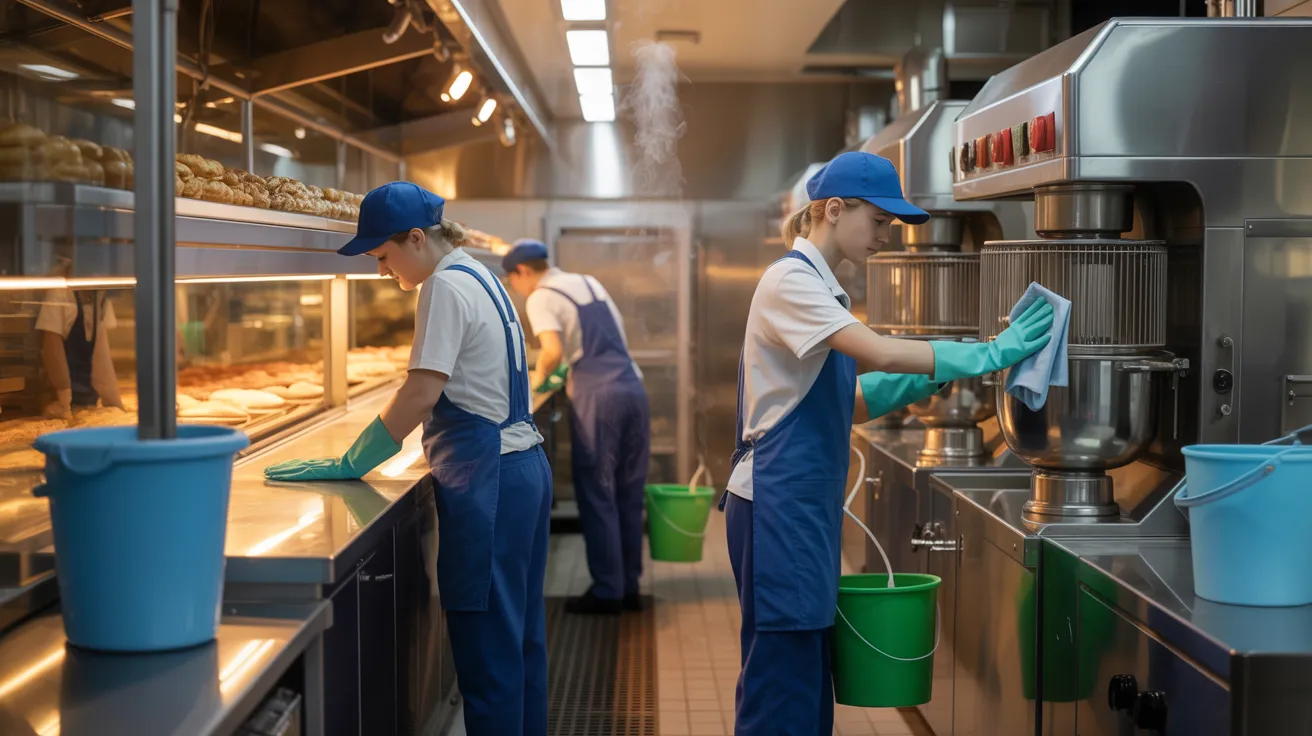
Professional sanitation and food hygiene professionals in Brampton support restaurants, commissaries, bakeries, warehouses, and mobile food services staying compliant. They sanitize high-contact points, food contact areas, equipment, floors, drains, restrooms, and prep zones with approved chemicals, at correct dilution, and documenting contact times. You require regular sanitation determined by risk, volume, allergens, and inspections, plus verification records that support Hazard Analysis Critical Control Points, audits, and regulatory adherence. The sections below explains what strong sanitation programs should include.
Essential Summary
- Brampton's sanitation experts provide services to restaurants, grocery departments, commissaries, warehouses, bakeries, schools, mobile vendors, and allergen-sensitive operations.
- High-touch surfaces, food-contact equipment, kitchens, floors, drains, restrooms, and storage areas are disinfected using sectional methods to reduce cross-contamination.
- Proper chemical concentration, compatibility, and contact time are validated by certified providers, with conclusion filed via samples, reviews, and correction logs.
- Maintenance calendars should follow threat, output capacity, transitions, releases, and guidelines, with routine, regular, and cyclical duties distributed by location.
- Opt for providers with HACCP, public-health, knowledge, WHMIS, instruction, liability, credentials, colour-coded tools, and compliance-ready sanitation paperwork.
Brampton Facilities That Need Food Safety Cleaning: Which Ones?
You must follow food safety cleaning if your business is subject to health inspections, food codes, or HACCP protocols. This covers dining establishments, employee cafes, distribution hubs, market sections, meat shops, fish stands, retail outlets, and food service kitchens.
You also need documented food sanitation in storage facilities, food production centers, refrigerated locations, bakery retailers, school meal programs, event venues, and food distribution hubs. Mobile and temporary operations count too, including catering trucks, festival vendors, and pop-up food booths. If your staff prepare raw materials, portion finished foods, warm up meals, or maintain allergen storage, your facility needs recorded sanitation procedures. In Brampton, sanitation isn't discretionary; it's part of statutory, business, and public health compliance.
What Services Do Brampton Cleaning Experts Provide?
Professional cleaning services specializing in Brampton sanitize touched surfaces, food preparation areas, floors, and sanitary facilities in compliance with food safety regulations. Emphasis on these spaces occurs because they pose maximum contamination danger, injury hazards, and possible regulatory violations.
When you understand what they clean, you can ensure your operation's cleaning procedures satisfy operational and regulatory requirements.
Cleaning High-Touch Points
structure sanitization intervals considering usage patterns, exposure levels, and facility operations.
sample collection to verify sterilization results
Kitchen Areas, Floor Surfaces, and Bathroom Spaces
Professional cleaners in Brampton prioritize kitchens, floors, and restrooms given that each location involves distinct food safety, falling hazards, and public health requirements. In industrial kitchens, you need grease removal from cooking stations, appliance surfaces, drain systems, preparation areas, and backsplashes to reduce contamination and pest pressure.
You should also expect documented flooring maintenance. is likewise provided as part of the service.
In restrooms, cleaners treat contact surfaces, bathroom hardware, partition walls, accessory dispensers, and receptacles then restock supplies and control odours. They also service restaurant moprooms, where chemical storage, sink hygiene, and drainage conditions can affect sanitation compliance and staff safety daily.
Why Food Safety Cleaning Matters in Brampton
Brampton businesses need to establish food-safe cleaning standards for meeting legal standards and passing inspections. You also minimize cross-contamination by cleaning and sanitizing food-contact surfaces, equipment, and high-touch areas correctly. Most importantly, you safeguard community wellness by reducing the chance of food poisoning in your establishment.
Regulatory Code Requirements
Food establishments in Brampton face rigorous sanitary regulations, making food safety cleaning essential to fulfilling health code requirements, protecting patrons, and preventing enforcement action. You must maintain hygienic food handling zones, verifiable cleaning logs, safe chemical management, and verifiable staff procedures that meet municipal and provincial inspection expectations.
Well-maintained cleaning files aid you in showing due diligence during official assessments and confirming your practices follow reliable patterns that are reproducible and tracked.
Contamination Prevention
Following health code standards depends on your skill in stopping cross-contamination in routine food work and sanitation. You must separate raw ingredients from ready-to-eat foods, disinfect work areas after use, and maintain separation of cleaning products from food. Well-defined guidelines decrease contamination chances and support consistent compliance during inspections.
Implementing allergen segregation helps keep priority allergens from contacting communal work zones, bins, or devices. Deploy dedicated cutting boards, color-coded tools, and strict utensil labeling so workers don't combine products while preparing or distributing. Enforce hand hygiene following fresh proteins, aquatic items, egg products, or allergen materials. Refresh cleaning cloths often, and verify sanitizer strength with test strips. When you train staff to follow these controls per shift, you establish a more hygienic, safer workplace that satisfies Brampton's food safety needs regularly.
Community Health Protection
If food safety cleaning deteriorates, you don't merely risk a failed inspection—you boost the probability of foodborne illness affecting customers, staff, and the broader Brampton region. You also weaken your role in protecting public health, especially in high-traffic food premises where pathogens travel quickly through surfaces, equipment, and touchpoints.
You depend on sanitation protocols that remove soils, properly disinfect, and ensure effectiveness. This entails adhering to exposure times, utilizing authorized sanitizers, recording schedules, and coaching staff to meet health-unit expectations. These actions support pathogen control by suppressing pathogens before affecting food surfaces or hands. In Brampton, robust sanitation shields vulnerable populations, curtails outbreak likelihood, and proves your diligence. When you adhere to proper protocols, you go beyond regulations—you substantially reduce risk and advance safer food handling across the region.
How Does Cleaning Support Food Safety Compliance?
Embracing rigorous cleaning routines secures food safety compliance by lowering contamination exposure, preventing pathogen multiplication, and positioning your facility in accordance with sanitation requirements under HACCP-based programs and public health regulations. You confirm that food-contact surfaces remain visibly clean and microbiologically controlled, enabling documented preventive controls and inspection readiness.
Proper cleaning procedures also enhance allergen management by removing residues that can trigger undeclared allergen exposure.
When Ought You Schedule Commercial Cleaning?
Cleaning schedules work best when you set them according to risk, production volume, and regulatory requirements rather than relying on a fixed calendar alone.
Managing periodic tasks distinctly allows for improved scheduling.
How Do You Choose Brampton Cleaning Experts?
Start by screening providers against food-safe sanitation requirements, not cost only. You should verify that each company understands CFIA, public health, and HACCP-aligned expectations relevant to your facility. Ask for insurance documentation, WHMIS compliance, documented staff training, and supervision practices. Review whether technicians understand cross-contamination risks, chemical handling, and traceable sanitation records.
You should further examine service consistency and answerability. Request references from food facilities in Brampton, then review reply speed, corrective-action procedures, and communication protocols. Validate the company supports supplier audits and can supply compliance documentation to authorities or external parties. Confirm equipment is maintained, colour-coded tools are applied correctly, and site-specific hazards are identified. A experienced service ensures regulatory compliance, product quality, and your reputation in the market.
Which components are contained in a Food Safety Cleaning Plan?
Put together a written program that clarifies every sanitation task, standard, and responsibility before production begins. You should specify cleaning frequencies, approved chemicals, dilution rates, contact times, tools, and verification methods for each sector, surface, and equipment. Make sure to include pre-operational inspections, corrective actions, and employee training requirements.
Your framework should also include cross-contamination prevention, waste disposal, pest management measures, and scheduled documentation for restrooms, drains, floors, and food-contact areas. Specify how you'll separate raw and ready-to-eat processes, help with ingredient tracking, and copyright accurate allergen labeling through validated cleaning between product changes. You should establish accountability, maintain signed records, and review results against regulatory standards, HACCP controls, and customer requirements. When gaps appear, adjust procedures immediately key resource and retrain staff.
Frequently Asked Questions about the Plan
Will sanitation providers manage nighttime hours at Brampton properties?
Yes, you can arrange cleaning services to accommodate nighttime operations in Brampton facilities. You'll organize overnight sanitation around operational windows, access requirements, and staffing levels. Services typically establish nighttime procedures to minimize disruption, stay compliant, and record finished tasks. You should confirm arrival schedules, supervision, lockout protocols, and disposal procedures before starting service.
Can sanitation professionals manage hazardous incidents?
Yes, you can locate Brampton cleaning professionals providing hazard containment options. They handle hazardous incidents, assess dangers, contain affected zones, and begin swift decontamination to reduce risk and avoid operational impact. You should confirm timeframes, certifications, safety protocols, and waste procedures. If your facility must meet compliance standards, pick a provider that tracks incidents, adheres to standards, and supports verification.
Can plant-based disinfectants be used safely on food-contact surfaces?
Absolutely, eco-friendly disinfectants prove to be secure for surfaces contacting food when you pick disinfectants approved for food contact and complying with regulations. You must validate exposure duration, mixing proportions, and rinse protocols in advance of use. Plant based formulas minimize harsh chemical exposure, though you require confirmation of performance against relevant pathogens. For ensuring residue-free conditions, adhere to manufacturer instructions exactly and ensure your cleaning agent complies with food industry regulations.
Will cleaning plans respond to seasonal shifts?
Without question, sanitation programs customize readily for production fluctuations. Revise schedules, labor allocation, cleaning agents, and validation steps to fit production rhythms while preserving regulatory requirements. Lower equipment downtime by timing cleaning around production shifts, high demand periods, and equipment use patterns. Additionally update standard operating procedures, instruction programs, and environmental testing to account for seasonal hazards, new allergens, or increased soil loads. Periodic assessments keep the strategy effective.
Are professional cleaning companies offering staff training on hygiene protocols?
Yes, professional cleaning services typically educate your team on sanitation best practices. You get employee instruction on correct chemical application, exposure periods, contamination control, equipment disassembly, and record keeping. They typically align training with HACCP, GMP, and CFIA or local public health regulations. Many perform hygiene inspections to verify compliance, spot deficiencies, and strengthen remedial steps. This helps you sustain uniform processes, pass inspections, and minimize contamination hazards regularly.
Closing Remarks
Partnering with Brampton commercial cleaning and food safety professionals means more than cleaning—it ensures your facility stays inspection-compliant and your protocols are defensible. From processing facilities to kitchens, each cleaned area and maintained corner lessens contamination risk and prevents major expenses. By arranging service on appropriate schedules and executing a comprehensive cleaning strategy, you protect your workforce, clients, and your reputation. In a heavily regulated sector, clean environments are non-negotiable—they're vital to proper management.